Perspective 006 Comparison, Competition, and Being Chosen

ABOUT THIS PERSPECTIVE

I want a facelift. I really, really do. But I haven’t made the appointment because I also want to make peace with my aging face.

The thing is, I like feeling beautiful. And I never feel more beautiful than after I’ve done my makeup and put on my false lashes. Without the getup, I see the wrinkles, blemishes, and uneven color of my skin. Sometimes I wonder how much of that is vanity and how much comes from what I’ve learned about how a woman is supposed to look.

Either way, I hate that I even think about it.

Even letting my hair go gray turned into an event. I stopped coloring it because I had better things to do than spend two hours at the salon every single month. I checked with my friends and my mom and talked it through like I was planning a launch. I like it now, but I was worried about letting it show.

And why wouldn’t I be? We live in a world where gray hair makes a man look distinguished but a woman look old.

I might think this was all in my head if I hadn’t spent so many years behind closed doors with a bunch of accomplished women. I’ve heard them pick apart their bodies, their skin, their hair, and how they stack up against other women. Then they turn to their businesses and come up with just as many reasons they don’t measure up.

The part I resent is that we hear what makes a woman beautiful, successful, acceptable, and worthy so often that it becomes a measuring stick. We measure ourselves against our younger selves, who we think we should be, and the women around us.

And the standards we use to find fault with other women are the same ones we use on ourselves.

I’d love to think there’s a simple way out of this. But it’s hard to escape the air we breathe.

THE HABIT OF MEASURING

Three women in conversation beside a burgundy title banner.

As women, we don’t necessarily use the same standards in every area of our lives, but we bring the same habit of measuring to each one.

A woman looks at her aging face and wonders whether she should change it. But that thought doesn’t develop in isolation. She already has an idea about what makes a woman beautiful, what aging means, and what she’s supposed to look like.

She looks at her life and wonders whether it’s the life she should have by now. Maybe she never wanted children. Maybe she'd rather have a wife, or she doesn’t want a partner at all. Nobody has to say it, but motherhood and wifehood still hang over her anyway. So she measures the life she chose against the one she was told to want.

Then there’s the woman in business. She looks at what she’s built and wonders whether she’s successful enough. But successful enough compared to what?

Somewhere along the way, she’s developed ideas about what success should look like, too. Maybe it’s how much she earns, how many clients she has, the size of her audience, or how quickly her business is growing.

Those are real things she can measure. Then she looks at another woman’s business, and something changes. She’s no longer simply looking at what the other woman has built. She’s using it to grade herself.

But the comparison doesn’t create the standard. The standard is already there, influencing what she notices and how she interprets it.

It’s why another woman doesn’t have to be competing with us for us to be competing with her. She may not even know we exist.

Whether it’s our faces, our lives, or our businesses, the subject changes, but the measuring persists.

That’s how another woman’s success can become evidence of our own perceived inadequacy, even when her success has nothing to do with ours.

As women, we don’t necessarily use the same standards in every area of our lives, but we bring the same habit of measuring to each one.

A woman looks at her aging face and wonders whether she should change it. But that thought doesn’t develop in isolation. She already has an idea about what makes a woman beautiful, what aging means, and what she’s supposed to look like.

She looks at her life and wonders whether it’s the life she should have by now. Maybe she never wanted children. Maybe she'd rather have a wife, or she doesn’t want a partner at all. Nobody has to say it, but motherhood and wifehood still hang over her anyway.

So she measures the life she chose against the one she was told to want.

Then there’s the woman in business. She looks at what she’s built and wonders whether she’s successful enough.

But successful enough compared to what?

Somewhere along the way, she’s developed ideas about what success should look like, too. Maybe it’s how much she earns, how many clients she has, the size of her audience, or how quickly her business is growing.

Those are real things she can measure. Then she looks at another woman’s business, and something changes. She’s no longer simply looking at what the other woman has built. She’s using it to grade herself.

But the comparison doesn’t create the standard. The standard is already there, influencing what she notices and how she interprets it.

It’s why another woman doesn’t have to be competing with us for us to be competing with her. 

She may not even know we exist.

Whether it’s our faces, our lives, or our businesses, the subject changes, but the measuring persists.

That’s how another woman’s success can become evidence of our own perceived inadequacy, even when her success has nothing to do with ours.

WHAT’S A MAN GOT TO DO WITH IT?

A patriarchal system puts most of the money, authority, and decision-making power in men’s hands. That gives men greater access to resources, protects their interests, and allows them to set expectations for women.

In exchange, men are expected to provide. Women are expected to fulfill their roles as wives and mothers.

That’s the arrangement. And it isn’t over.

Historically, women had far fewer ways to secure their financial futures independently, so their class, family circumstances, and available opportunities mattered enormously. For a woman without money or family resources to fall back on, marrying well determined her quality of life and how much choice she had over her future.

Marrying well meant safety, security, and comfort. Not marrying well, or not marrying at all, often meant dependence, hardship, and few ways to change her circumstances.

And since men and their families were doing the choosing, they got to decide what made a woman worth choosing. They wanted her young, pretty, fertile, from a good family, and prepared to be what they considered a good wife. She was expected to be supportive, obedient, and whatever else the arrangement required.

A woman with shoulder-length hair, photographed from behind.
Detail of a seated woman wearing a polka-dot top and holding sunglasses.

For a woman who didn’t fit the mold, there could be hell to pay, starting with the security she depended on.

So it makes sense that when so much depended on marrying well, the woman standing next to you could be a threat.

She might be younger, prettier, from a better family, or simply more acceptable to the people making the decisions. And when there were only so many men with the resources to offer the life you needed, another woman’s good fortune meant fewer possibilities for you.

What that meant was that women had to fight to stand out, even if another woman paid the price.

That’s what competition looks like when your future is on the line.

A patriarchal system puts most of the money, authority, and decision-making power in men’s hands. That gives men greater access to resources, protects their interests, and allows them to set expectations for women.

In exchange, men are expected to provide. Women are expected to fulfill their roles as wives and mothers.

That’s the arrangement. And it isn’t over.

Historically, women had far fewer ways to secure their financial futures independently, so their class, family circumstances, and available opportunities mattered enormously. For a woman without money or family resources to fall back on, marrying well determined her quality of life and how much choice she had over her future.

Marrying well meant safety, security, and comfort. Not marrying well, or not marrying at all, often meant dependence, hardship, and few ways to change her circumstances.

And since men and their families were doing the choosing, they got to decide what made a woman worth choosing. They wanted her young, pretty, fertile, from a good family, and prepared to be what they considered a good wife. She was expected to be supportive, obedient, and whatever else the arrangement required.

For a woman who didn’t fit the mold, there could be hell to pay, starting with the security she depended on.

So it makes sense that when so much depended on marrying well, the woman standing next to you could be a threat.

She might be younger, prettier, from a better family, or simply more acceptable to the people making the decisions. And when there were only so many men with the resources to offer the life you needed, another woman’s good fortune meant fewer possibilities for you.

What that meant was that women had to fight to stand out, even if another woman paid the price.

That’s what competition looks like when your future is on the line.

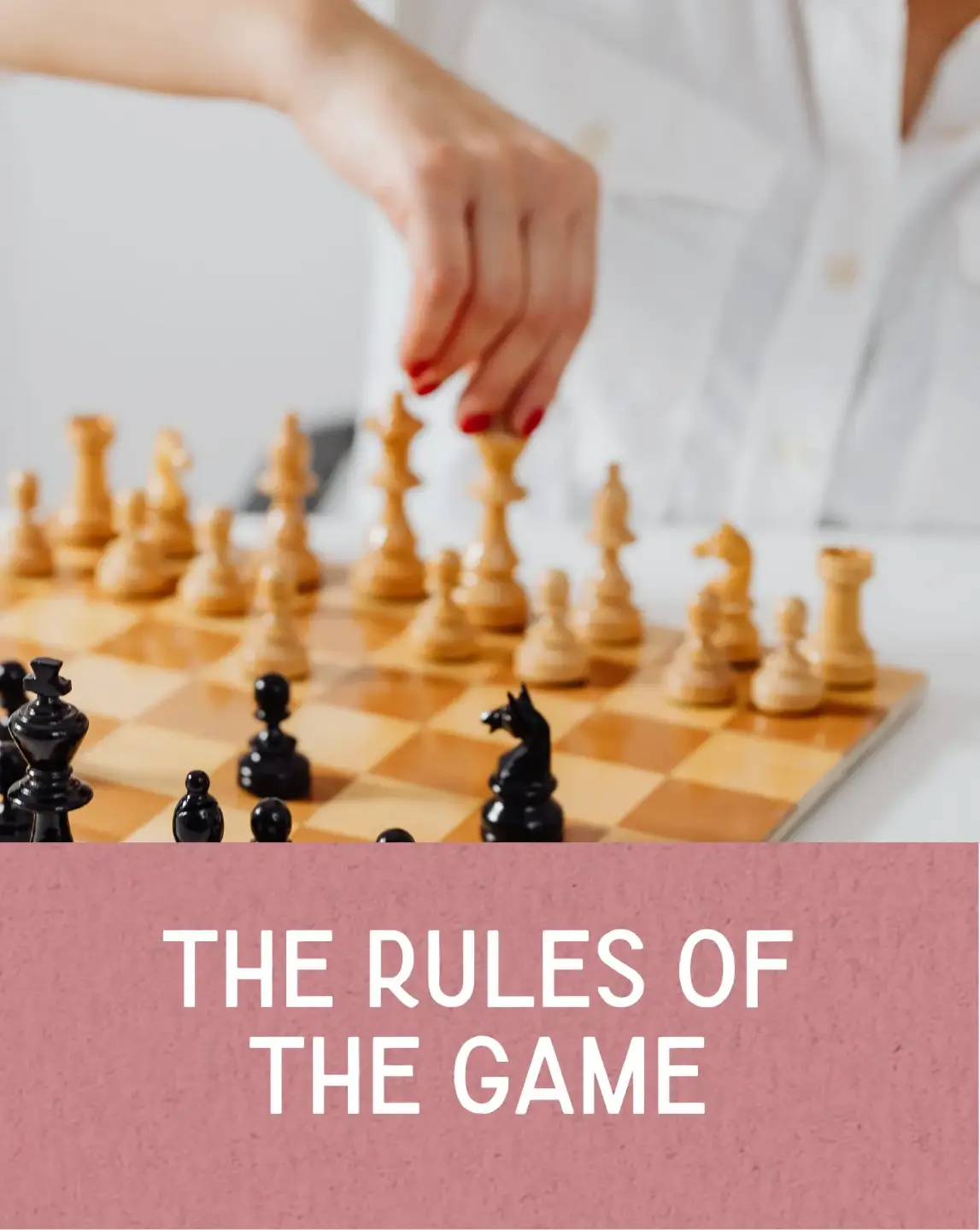
A woman moving a white piece on a chessboard

THE RULES OF THE GAME

A patriarchal system doesn’t have to tell women to compete with one another. It simply creates the conditions in which competing makes sense and sometimes feels necessary.

Women learned what men wanted, which qualities they rewarded, and what they expected from a wife. And since men did the choosing, their rules might as well have been law. There were rules about how to look, behave, speak, and keep a husband satisfied. And plenty of advice about how to get it right.

(Remember The Proper Care and Feeding of Husbands? Published in 2004. That was interesting.)

And none of it stopped at the altar.

A woman had to work to keep her husband, especially when her security depended on him. She had to manage the household, meet his needs, and remain the wife he’d chosen.

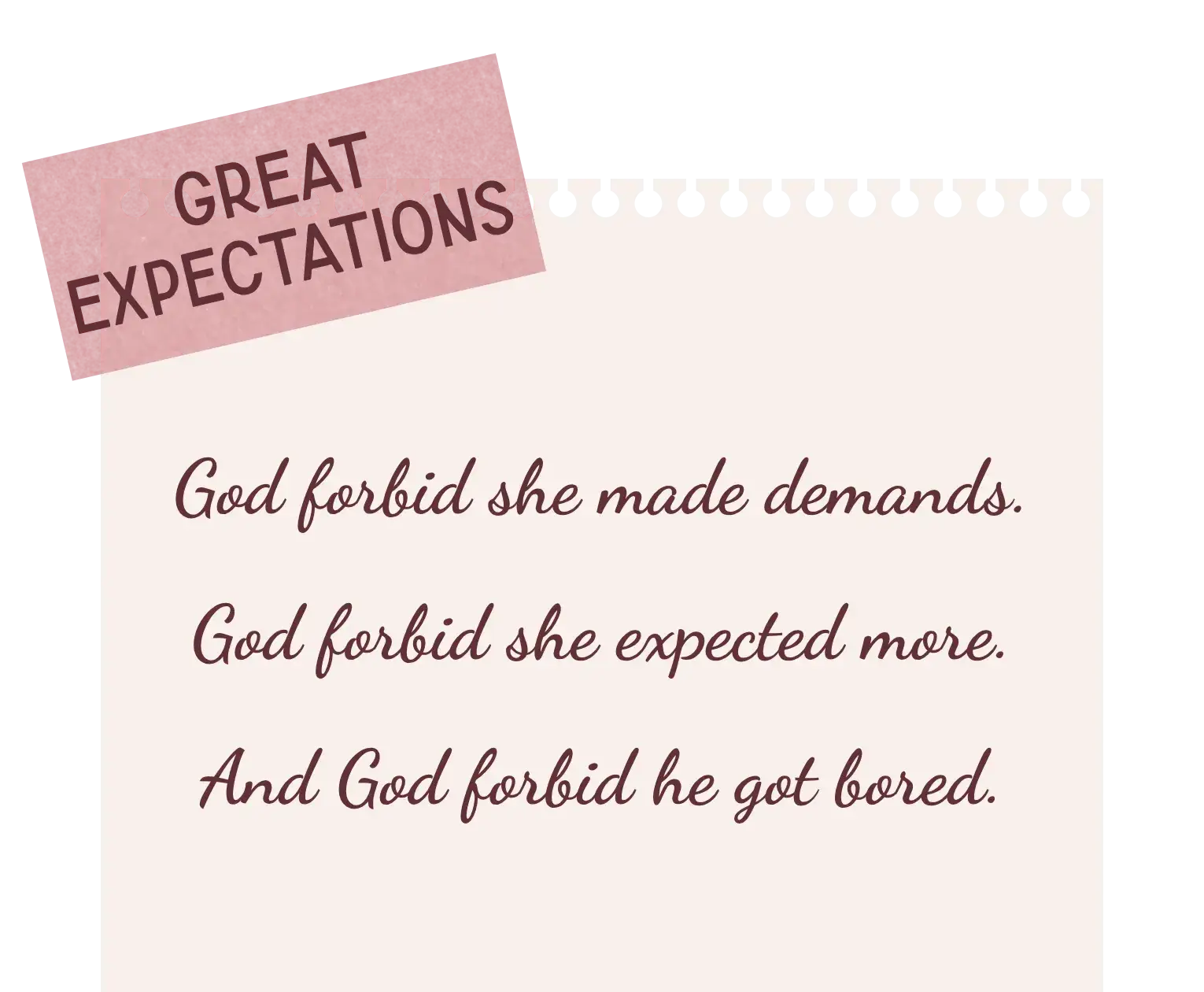
God forbid she made demands. God forbid she expected more.

And God forbid he got bored.

The measuring went on and on because her position could change on a dime. If he wanted another woman, she could lose the security she’d spent years trying to protect.

So women became vigilant. They watched for threats, found fault with other women, and sometimes knocked them down. All to protect their positions.

That could mean friend against friend, sister against sister, sometimes even mother against daughter. Women who needed one another’s support could end up isolated, comparing and competing instead, even when nobody said a word about the competition.

And we have an entire vocabulary for criticizing women who behave that way.

Catty. Backstabber. Fake. Bitch. Gold digger. Or simply, you can’t trust women.

We recognize the behavior and judge it. But how often do we examine what made women feel that competing was necessary in the first place?

Women lived by those rules for so long that the rules themselves began to disappear from view. They became the way things were, even what it meant to be a woman.

And we kept passing them along, all the way to today.

A patriarchal system doesn’t have to tell women to compete with one another. It simply creates the conditions in which competing makes sense and sometimes feels necessary.

Women learned what men wanted, which qualities they rewarded, and what they expected from a wife. And since men did the choosing, their rules might as well have been law. There were rules about how to look, behave, speak, and keep a husband satisfied. And plenty of advice about how to get it right.

(Remember The Proper Care and Feeding of Husbands? Published in 2004. That was interesting.)

And none of it stopped at the altar.

A woman had to work to keep her husband, especially when her security depended on him. She had to manage the household, meet his needs, and remain the wife he’d chosen.

The measuring went on and on because her position could change on a dime. If he wanted another woman, she could lose the security she’d spent years trying to protect.

So women became vigilant. They watched for threats, found fault with other women, and sometimes knocked them down. All to protect their positions.

That could mean friend against friend, sister against sister, sometimes even mother against daughter. Women who needed one another’s support could end up isolated, comparing and competing instead, even when nobody said a word about the competition.

And we have an entire vocabulary for criticizing women who behave that way.

Catty. Backstabber. Fake. Bitch. Gold digger. Or simply, you can’t trust women.

We recognize the behavior and judge it.

 But how often do we examine what made women feel that competing was necessary in the first place?

Women lived by those rules for so long that the rules themselves began to disappear from view. They became the way things were, even what it meant to be a woman.

And we kept passing them along, all the way to today.

EVERYBODY’S PLAYING THE GAME

I would love nothing more than to leave all of this in the past, as if women got more access to money and opportunity and the patriarchy politely packed its bags and left.

But that’s not what happened.

Women have more access and more choice today. We can make our own money, build businesses, lead organizations, and decide how we want to live.

But having more choices doesn’t automatically release us from the expectations we’ve learned to live by. And it certainly doesn’t mean everyone around us has stopped expecting us to follow the old rules.

The need to compete for a husband may have changed. (Although has it, for all of us?) But the measuring continues.

We compare our bodies, our relationships, our businesses, and our success. We pay attention to what gets rewarded and who gets picked.

And the person doing the choosing isn’t necessarily a man anymore.

It’s the client deciding whom to hire, the employer deciding whom to promote, or the friend deciding whom to invite. Those are ordinary decisions people make every day, but we can turn their decisions into judgments about ourselves.

Sometimes we’re so used to playing the game that we don’t even recognize we’re playing.

Take me, for example. I compare myself with my partner, Ron, all the time.

Ron grew up on a farm, put himself through college, earned his MBA, and built a very successful career. He’s ambitious, dedicated, and committed. He’s worked incredibly hard for everything he’s accomplished, and I admire him for that.

But our paths were different.

My mother didn’t have a husband providing for us in Mexico. She had to find another way to support her children and create a better life. So she went to America. That’s how I became an immigrant.

Years later, I was raising my own children as a single mother while building a business and making my own way.

Ron had his own obstacles to overcome, but he didn’t have to navigate the same expectations I faced as an immigrant, a single mother, and especially as a woman.

And here’s the part that makes me laugh at myself now.

For all my independence, I spent three years being mad at that man because he hadn’t proposed. (I just wanted him to put a ring on it, damn it.)

I’d built businesses, raised my children, and made my own way. Yet somehow, to me, Ron putting a ring on my finger meant something about my value.

The funny thing is, I don’t even know if I wanted to get married. We’re not married today.

But somewhere along the way, his willingness to marry me had become a measure of what I thought I was worth.

NO ONE’S IMMUNE

In a patriarchal system, women have expectations to meet, and so do men.

Women are supposed to look good, take care of the household, and remain available. Men are supposed to provide, protect, and be the rock. And when a man struggles or needs support himself, showing vulnerability can come with a price of its own.

I see these expectations playing out in the women I work with all the time.

There’s the woman building her business whose husband can’t understand why dinner isn’t ready, the house isn’t as tidy, or she’s suddenly less available. She resents his expectations, but she still expects him to pay the mortgage, cover the bills, and avoid decisions that could put their livelihood at risk.

There’s the accomplished woman looking for a husband who’s wealthy and “generous” because she wants a man who’ll treat her like a queen.

A woman seated at a desk, writing beside her laptop.
A woman in a white jacket resting her head on her hand while looking at her laptop.

I’ve worked with a few men, too, usually referred by women in their lives. When our conversations get personal, some have told me they feel like little more than an ATM. Their families depend on their paychecks, yet they can find themselves criticized for being distant or emotionally unavailable.

I’ve known men who’ve cried away from their families because they were afraid their partners would see them as weak.

So where’s the room for them to struggle, take a break, or want something different?

The patriarchy hurts everybody. But that doesn’t mean men and women have faced the same restrictions or paid the same price.

We resent the expectations placed on us and still hold other people to the very rules we’re trying to escape.

So after all that effort, have we even asked ourselves whether we want what we’re trying so hard to win?

In a patriarchal system, women have expectations to meet, and so do men.

Women are supposed to look good, take care of the household, and remain available. Men are supposed to provide, protect, and be the rock. And when a man struggles or needs support himself, showing vulnerability can come with a price of its own.

I see these expectations playing out in the women I work with all the time.

There’s the woman building her business whose husband can’t understand why dinner isn’t ready, the house isn’t as tidy, or she’s suddenly less available. She resents his expectations, but she still expects him to pay the mortgage, cover the bills, and avoid decisions that could put their livelihood at risk.

There’s the accomplished woman looking for a husband who’s wealthy and “generous” because she wants a man who’ll treat her like a queen.

I’ve worked with a few men, too, usually referred by women in their lives. When our conversations get personal, some have told me they feel like little more than an ATM. Their families depend on their paychecks, yet they can find themselves criticized for being distant or emotionally unavailable.

I’ve known men who’ve cried away from their families because they were afraid their partners would see them as weak.

So where’s the room for them to struggle, take a break, or want something different?

The patriarchy hurts everybody.

But that doesn’t mean men and women have faced the same restrictions or paid the same price.

We resent the expectations placed on us and still hold other people to the very rules we’re trying to escape.

 So after all that effort, have we even asked ourselves whether we want what we’re trying so hard to win?

THE PRICE OF KEEPING SCORE

She pays for it with her peace, her
relationships, her income, and her future.

What she’s worked hard to achieve becomes another measure of whether she’s enough.

  • Exhausting herself keeping up the appearance of success.
  • Letting one rejection undermine confidence in years of good work.
  • Taking someone else’s choice as a measure of her worth.

  • Resenting expectations she keeps meeting to feel accepted.
  • Diminishing her achievements because another woman has achieved more.

She’s done enough. She just can’t feel it.

It’s hard to get close when there’s always something to protect.

  • Losing a friendship to a rivalry only one of them knew about.
  • Pretending everything’s fine when she could use real support.
  • Dismissing another woman’s method instead of learning from it.
  • Keeping what she knows to herself so another woman can’t get ahead.
  • Saying yes to keep the peace while her own needs go unmet.

She’s surrounded by people. She’s still doing it alone.

She discounts herself before anyone else can.

  • Cutting her rate before anyone questions her price.
  • Adding unpaid work to make her fee easier to justify.
  • Avoiding the sales conversations her business depends on.
  • Missing referrals by treating every peer as a competitor.
  • Passing on a promotion she’s more than qualified to pursue.

She’s paying for a rejection that never happened.

She keeps building, just not toward her own plans.

  • Pursuing someone else’s definition of success for years.
  • Learning alone what another woman could’ve taught her.
  • Staying in work she’s outgrown rather than risking a new direction.
  • Keeping her plans on hold so nobody else has to adjust.
  • Taking herself out of the running before anyone can say no.

The life she wants is still waiting. So is she.

THE PRICE OF KEEPING SCORE

She pays for it with her peace, her relationships, her income, and her future.

What she’s worked hard to achieve becomes another measure of whether she’s enough.

  • Exhausting herself keeping up the appearance of success.
  • Letting one rejection undermine confidence in years of good work.
  • Taking someone else’s choice as a measure of her worth.
  • Resenting expectations she keeps meeting to feel accepted.
  • Diminishing her achievements because another woman has achieved more.

She’s done enough. She just can’t feel it.


It’s hard to get close when there’s always something to protect.

  • Losing a friendship to a rivalry only one of them knew about.
  • Pretending everything’s fine when she could use real support.
  • Dismissing another woman’s method instead of learning from it.
  • Keeping what she knows to herself so another woman can’t get ahead.
  • Saying yes to keep the peace while her own needs go unmet.

She’s surrounded by people. She’s still doing it alone.

She discounts herself before anyone else can.

  • Cutting her rate before anyone questions her price.
  • Adding unpaid work to make her fee easier to justify.
  • Avoiding the sales conversations her business depends on.
  • Missing referrals by treating every peer as a competitor.
  • Passing on a promotion she’s more than qualified to pursue.

She’s paying for a rejection that never happened.

She keeps building, just not toward her own plans.

  • Pursuing someone else’s definition of success for years.
  • Learning alone what another woman could’ve taught her.
  • Staying in work she’s outgrown rather than risking a new direction.
  • Keeping her plans on hold so nobody else has to adjust.
  • Taking herself out of the running before anyone can say no.

The life she wants is still waiting. So is she.

CHOOSING FOR HERSELF

For a woman, wanting to be chosen can become more important than knowing what she wants.

I keep coming back to those three years I spent waiting for Ron to propose. I knew what I wanted him to do. What I hadn't figured out was whether I wanted to get married.

Somehow, his choice had become more important than mine.

I did the same thing in business. In my real estate days, I worked primarily with male investors. I spent far more time thinking about whether they wanted to work with me than whether I wanted to work with them.

As if I didn't have a say.

THE OTHER SIDE OF BEING CHOSEN

There are things a woman still needs other people to choose her for. A client has to hire her. An employer has to offer her the job. And a relationship takes two people who want to be in it. Those decisions have real consequences for her money, her work, and her future.

But she gets to choose, too. For years and years, women had far fewer choices, and the ones they had often came with strings attached.

She can decide which clients she wants to work with, whether a promotion is worth pursuing, and what she's willing to give to keep a relationship. And when she goes after a contract, she can give it her best shot and let the rest go. If she gets it, great. If she doesn't, maybe there's something to learn.

We can't always decide who chooses us. But we can choose for ourselves.

SEEING ONE ANOTHER DIFFERENTLY

Sometimes there’s an understanding between women that doesn’t need to be explained.

Two women can recognize something in each other without knowing each other, without being friends, and without needing anything from each other.

But for generations, women were pitted against each other for a husband, a job, or one of the few places in the room open to a woman. That history doesn’t disappear because the rules changed. When another woman has been the competition for that long, it’s hard to see her any other way.

So her success starts to feel like a judgment about ours.

ADMIRATION OR RESENTMENT

There’s a difference between admiring what another woman has and resenting her for having it. Admiration can show us what we want. Resentment keeps score.

Women have been taught to spend so much time watching other women, noticing who’s getting ahead, how far ahead she’s getting, and what she has that we don’t. Sometimes we become so preoccupied with her progress that we give it more attention than our own.

And it all feeds the idea that another woman’s success says something about ours.

What if we sealed that idea in a time capsule, buried it, and forgot where we put it?

Imagine what we could build with all that time and energy.

That would leave more room for women to appreciate what other women have built, learn from one another, share what they know, or simply be glad another woman is doing well.

I’m often in rooms where women talk about how wonderful it feels to be around other women who genuinely want to see one another do well. They describe it as though they’ve discovered something extraordinary.

And I keep thinking, there’s enough of us out here trying to build something.

That kind of appreciation shouldn’t be so rare.

Why the Old Rules Are Hard to Leave Behind WHY THE OLD RULES ARE HARD TO LEAVE BEHIND

Another woman’s success may have nothing to do with yours, yet you still measure yourself against it. You can know the decision is yours and still wait for someone else’s approval. And you can be proud of what you’ve built and still feel you have something to prove.

Understanding where those responses come from is one thing. Changing what happens when they show up is another.

In my free on-demand masterclass, Moving Through Your Expansion Edge, we look at why moving toward something you want can bring up old expectations about what’s safe, acceptable, or possible. You’ll see the pattern that can make change feel harder than it should, and why trying harder doesn’t always help you move forward.

This Perspective explores how women learned to measure themselves and one another. The masterclass explores why those old rules can continue to influence our choices, even after we recognize them.

It’s free, on demand, and ready when you are.

Watch the Masterclass

HI, I'M BRENDA

I’ve spent decades studying human behavior, emotional adaptation, and the patterns that influence how people move through their lives.

For the last ten years, my focus has been primarily on women in business. Women who lead, build, make difficult decisions, and create results while older rules still decide what feels safe, acceptable, or possible.

I created Breakthroughs Made Simple™ because I kept watching intelligent, experienced women hit invisible walls that had nothing to do with what they knew or how hard they were willing to work. While the problem often looked different, the pattern underneath was the same.

I came to this work from lived experience.

Growing up, I saw that for women, access usually came through someone else. Someone else had the money, the authority, or the power to decide what happened next. I brought that understanding into adulthood, business, and motherhood.

Today, I study what happens when women gain more access to money, authority, power, visibility, and choice, and what they do with it once it's actually theirs.

That’s what this work is built from.

Brenda Terry
BRENDA TERRY
Founder and Creator of
Breakthroughs Made Simple™

HI, I'M BRENDA

Brenda Terry
BRENDA TERRY
Founder and Creator of
Breakthroughs Made Simple™

I’ve spent decades studying human behavior, emotional adaptation, and the patterns that influence how people move through their lives.

For the last ten years, my focus has been primarily on women in business. Women who lead, build, make difficult decisions, and create results while older rules still decide what feels safe, acceptable, or possible.

I created Breakthroughs Made Simple™ because I kept watching intelligent, experienced women hit invisible walls that had nothing to do with what they knew or how hard they were willing to work. While the problem often looked different, the pattern underneath was the same.

I came to this work from lived experience.

Growing up, I saw that for women, access usually came through someone else. Someone else had the money, the authority, or the power to decide what happened next. I brought that understanding into adulthood, business, and motherhood.

Today, I study what happens when women gain more access to money, authority, power, visibility, and choice, and what they do with it once it's actually theirs.

That’s what this work is built from.

WATCH THE MASTERCLASS

Laptop displaying the Moving Through Your Expansion Edge masterclass

This free on-demand masterclass shows you why increased pressure, responsibility, or change can make what used to feel manageable take more out of you, what keeps that friction going, and how to move through it.

EXPLORE THE PROGRAM

Breakthroughs Made Simple

Breakthroughs Made Simple™ helps you resolve the emotional material and internal interference keeping a persistent problem or struggle active, so you can have more room, more choice, and a clearer way through.

Perspective Library

003 | Living in the Middle

004 | What Comes After Yes

005 | Women, Money and Power

Sources

01

Sheppard and Aquino (2013), Much Ado About Nothing? Observers' Problematization of Women's Same-Sex Conflict at Work, Academy of Management Perspectives (how workplace conflict between women is perceived differently from comparable conflict involving men).

02

Wong and Penner (2016), Gender and the Returns to Attractiveness, Research in Social Stratification and Mobility (the relationship between attractiveness, grooming, and earnings).

03

Exley and Kessler (2022), The Gender Gap in Self-Promotion, The Quarterly Journal of Economics (gender differences in how people evaluate and describe their own performance).

04

Derks and colleagues (2011), Gender-Bias Primes Elicit Queen-Bee Responses Among Senior Policewomen, Psychological Science (how experiences of gender bias influence senior women's responses toward other women).

05

Faniko, Ellemers, and Derks (2016), Queen Bees and Alpha Males: Are Successful Women More Competitive Than Successful Men?, European Journal of Social Psychology (research challenging the assumption that successful women are inherently more competitive with other women).

06

Faniko and colleagues (2017), Nothing Changes, Really: Why Women Who Break Through the Glass Ceiling End Up Reinforcing It, Personality and Social Psychology Bulletin (how career sacrifices and workplace expectations can influence women's attitudes toward advancing junior women).

07

Arvate, Galilea, and Todescat (2018), The Queen Bee: A Myth? The Effect of Top-Level Female Leadership on Subordinate Females, The Leadership Quarterly (research examining how female political leadership affects women's advancement into management positions).